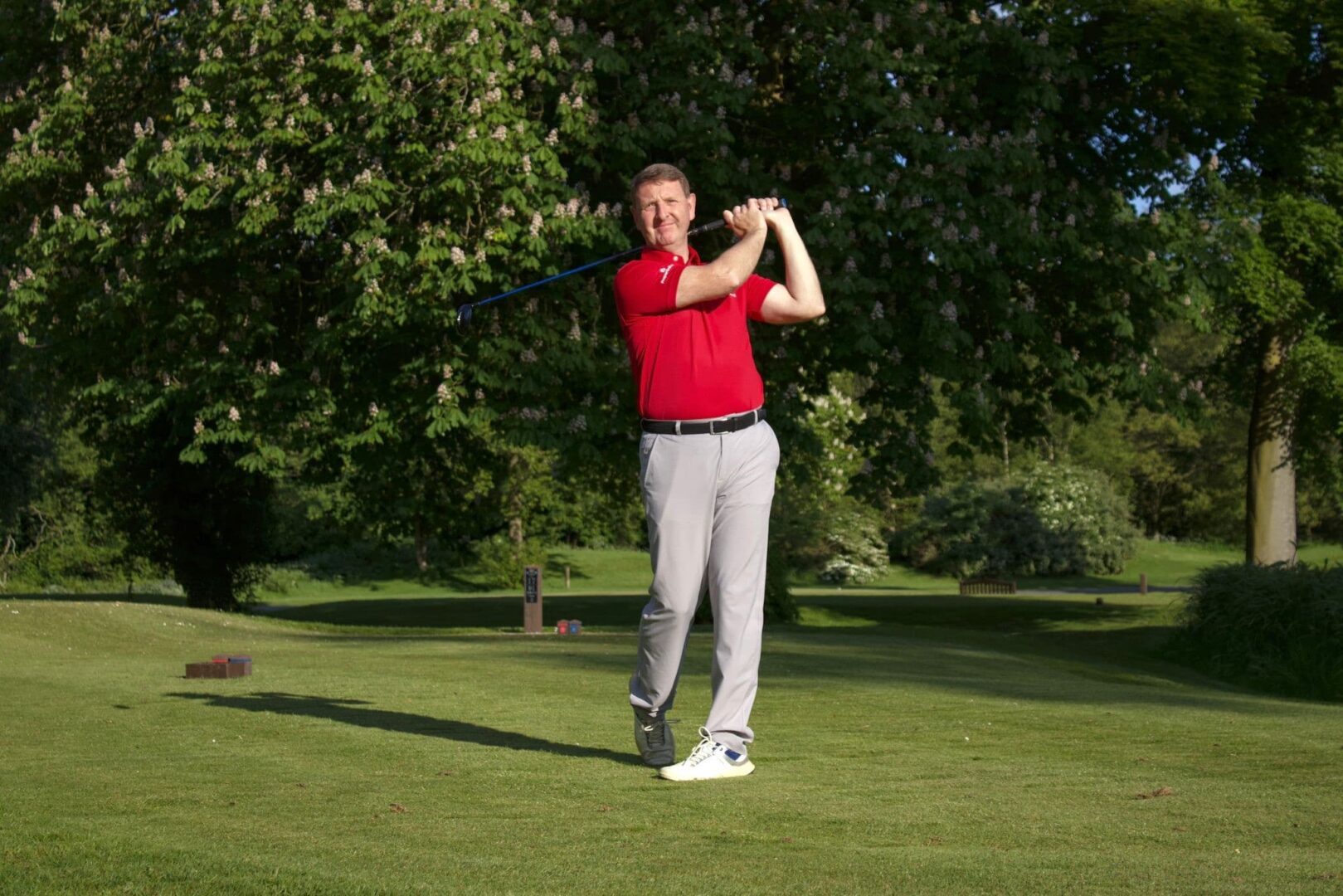
What Happens Inside a ProperGolfing Lesson
One of the most valuable things about a ProperGolfing lesson is that we do not guess.
We listen carefully to what the golfer is experiencing, we look at the ball flight, we measure what is actually happening, and then we work backwards from truth rather than theory.
In this session, the golfer arrived with a familiar frustration. He knew there was still a left miss in there, even though it was better than before. He also felt he was constantly trying to manage the swing on the way down, trying not to hold on, trying to get the club out there, and trying to stop the ball from going too far left or too far right. In other words, there was still interference, still management, still uncertainty.
That is very common in good golfers.
They are not always miles away. Often they are functioning well enough to score at times, but not with the kind of certainty that makes golf easier and more enjoyable.
Step 1: Start with the golfer’s reality
The lesson began with conversation, not instruction.
We explored:
- what the golfer was seeing on the course
- what the bad shot looked like
- what swing thoughts were currently in play
- whether pressure was increasing the problem
- what the golfer wanted from the session
That matters because golfers often tell you where the interference lives before they ever hit a shot.
Here, the golfer was clearly very conscious of the movement. He was thinking about not holding on, trying to follow it, trying to get it out there, and trying to control the outcome. That tells you straight away that the swing may not just be technical. It may also be carrying a burden of over-management.
Step 2: Measure the truth
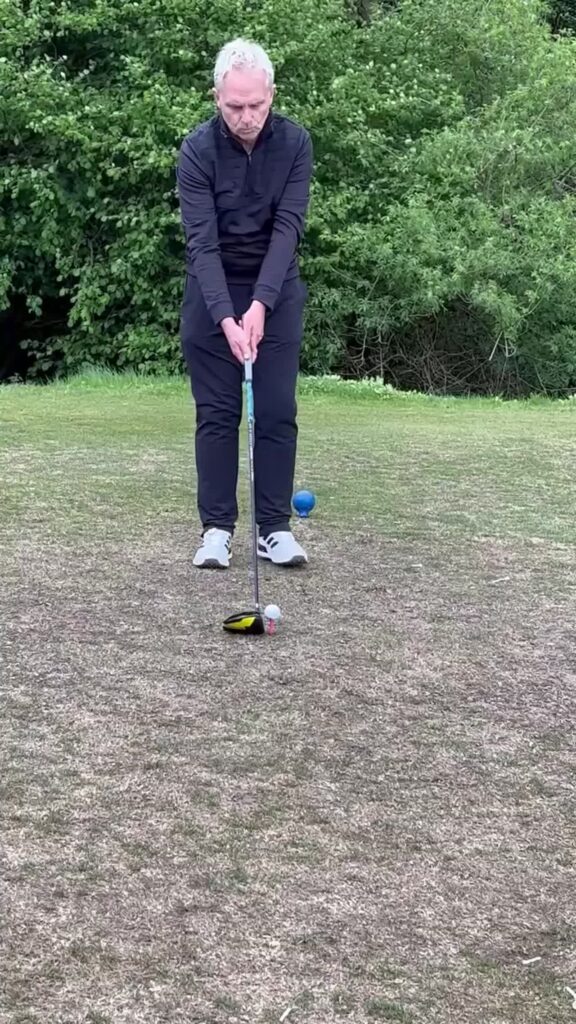
Rather than jump in with a fix, we hit shots and measured three things:
- club path
- club face / side spin
- angle of attack
Those three variables told the real story.
The club path was consistently too far into-out, initially around 10–11 degrees, which is a large number. The angle of attack was inconsistent early on, with a few shots hanging back and striking up on the ball instead of down. The side spin was climbing whenever the face had too much reacting to do.
This is where the lesson becomes powerful.
A lot of golfers would assume the problem is simply “the face.” But in this case, the face was often reacting to the path. The bigger the path problem, the more timing and hand action were needed to rescue the shot.
That is exactly why some golfers feel as though they have to keep saving the strike.

Step 3: Look at cause, not symptom
On video, the important issue became clear.
The club was moving too much “out” early, and the golfer was not turning the hips sufficiently in transition. The arms were getting away first, the club was working too much behind, and then the golfer had to time the return beautifully to stop the shot pattern from becoming too extreme.
So the problem was not that the swing was broken.
In fact, that is one of the most useful things the golfer heard in the session:
“It’s not broken.”
That matters.
Good coaching is not always about telling someone what is wrong. Often it is about showing them that they are closer than they think, then reducing the size of the miss so they can trust what they do have.
Step 4: Create a usable feel
This is where ProperGolfing lessons become very different from a lot of technical coaching.
We did not try to build a swing from positions.
We created a reference point and a feeling.
The feeling was that the shaft should work more “down” and more parallel to the intended plane on the way down, rather than dropping too much to the inside too early. Not “out-to-in.” Not chopping across it. Just less excessively under and behind.
That is a huge distinction.
The golfer’s fear was that if he changed it, he might go the other way and start cutting across it. But the data showed that every swing was still into-out. So we could reassure him with facts:
- you are not suddenly going out-to-in
- you do not need to fear that pattern
- we are simply reducing the severity of the existing one
That creates calm. Calm is important because it allows the golfer to commit.
Step 5: Use feedback to connect feel and result
As the golfer explored the new movement, the numbers started to shift.
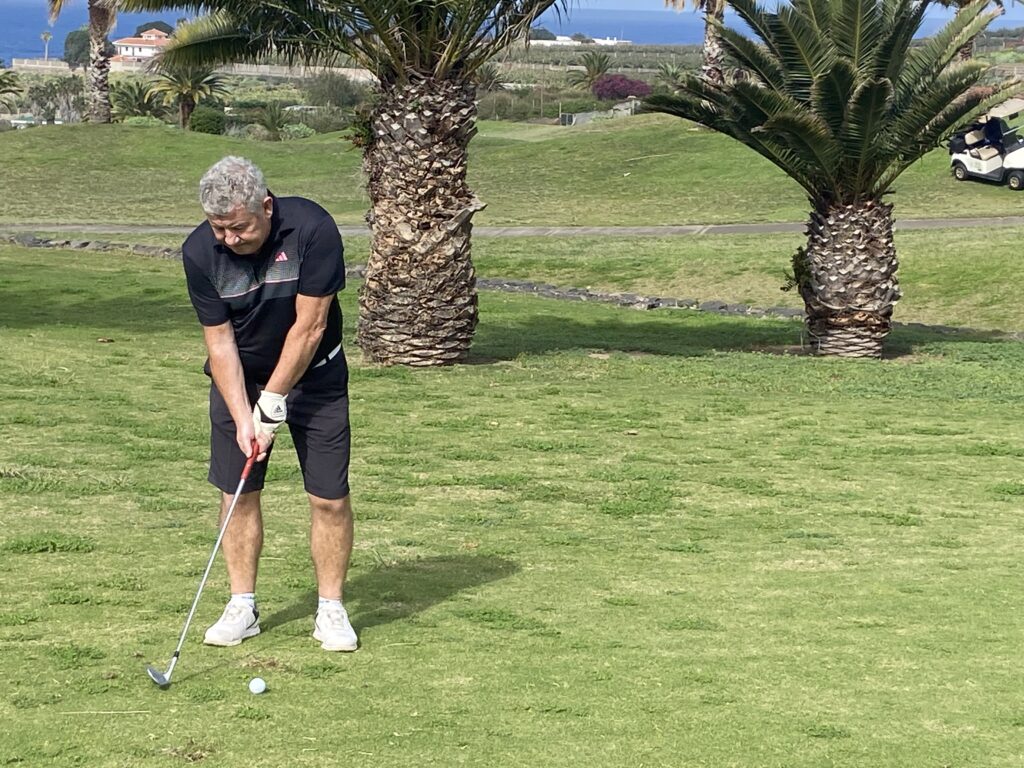
The club path reduced from around 11 degrees into-out to around 5 degrees, and at times even lower. That is a major change.
To move a path number by that amount in one session is significant.
And here is the key:
As the path improved, the side spin became much more manageable.
That is what the golfer needed to understand.
The left miss was not just some random curse. It was linked to a movement pattern that made the face more reactive. As the path shrank, the face had less work to do. The misses got tighter. The shot pattern became more playable.
This is one of the most important things that happens inside a lesson:
the golfer stops seeing shots as random and starts understanding cause and effect.
That changes confidence.
Step 6: Reduce tension and improve release
Another important part of the session was grip pressure.
When asked how tightly he was holding the club, the golfer admitted it was around 7 or 8 out of 10. We worked on getting that closer to 5 out of 10.
That is not a trivial detail.
Relaxed muscles move faster and more naturally. Tight hands often create a more manipulative clubface, especially under pressure. By softening the hold, the golfer could start to feel the clubhead more, release it more naturally, and move the body through without so much interference.
This is very ProperGolfing.
We are not trying to create effort.
We are trying to create organised freedom.
Step 7: Transfer it to the course
Another strong part of the session was that it did not stay in the studio as abstract mechanics.
We linked the movement to real holes, real fears, and real consequences.
The golfer talked about specific holes that create discomfort off the tee. We used those visuals to help him understand how an overdone into-out path points trouble into play and why a more neutral delivery gives him more functional space on the golf course.
That is vital.
A lesson is only as good as the golfer’s ability to take it onto the course.
So instead of ending with “there’s your position,” the lesson moved toward:
- what the golfer should feel on the way down
- what the golfer should watch for in the numbers
- what shape of miss is now acceptable
- how to recognise when the old pattern is returning
That is how transfer begins.
Step 8: Finish with clarity and confidence
By the end of the session, the golfer had:
- a much clearer understanding of why the ball was missing
- proof that the path had improved significantly
- better angle of attack numbers
- reduced side spin on the better swings
- increased speed as the movement became freer
- a practical feel he could rehearse on his own
Most importantly, the golfer could feel that the swing was becoming easier to trust.
That is often the real turning point.
When a golfer starts to believe:
“I know what this is now.”
“I know what the bad pattern is.”
“I know what better feels like.”
“I know what to work on.”
…then golf becomes more enjoyable again.
That is what a good lesson should do.
Key Lesson Theme
The face was not the main starting problem. The face was often reacting to a path that was too far into-out.
By improving body movement, reducing how far the shaft dropped behind, and creating a more neutral delivery, the golfer reduced the need for timing and hand rescue through impact.
The result was tighter dispersion, better strikes, improved speed, and more confidence.
What this lesson really shows
Inside a ProperGolfing lesson, we are doing far more than telling someone to “do this” or “do that.”
We are:
- listening to the golfer
- identifying the real pattern
- using data to confirm it
- showing what is causing what
- finding a feel that works for the individual
- reducing fear
- building a motion the golfer can trust
That is why lessons work best when they are not generic.
They are personal, evidence-based, and rooted in what is actually happening.
Simple takeaway
If your shot pattern feels unpredictable, do not just blame the clubface.
Often the face is reacting to something earlier in the motion.
In this case, reducing an overdone into-out path made the face easier to control, improved strike, and made the golfer’s bad shots much more manageable.
Sometimes the breakthrough is not a complete rebuild.
Sometimes it is shrinking the problem until the game feels playable again.
If you would like structured coaching based on real lesson evidence rather than random tips, you can access the full ProperGolfing training library through our online golf school.
Inside the membership you will find:
• structured swing training
• step-by-step practice plans
• detailed video lessons
• coaching insights from the Transformation Vault
• a global community of golfers improving the same way
👉 Get your free 30 day improvement plan here
https://propergolfing.com
Interested to read more? Senior golf lessons: Golfers Deserve Better. This Is Where It Begins – Proper Golfing
More here How to Create a STABLE Club Face Every Time – Golf Tip
See our real transformations here
To book our personalised golf coaching experience, go here Proper Golfing
See you on the tee,
Julian and Jo – Co-Creators of Proper Golfing and The Timeless Golf Swing Method
Proper Golfing
The leaders in real-world golf transformation for golfers over 50. No fluff. Just results