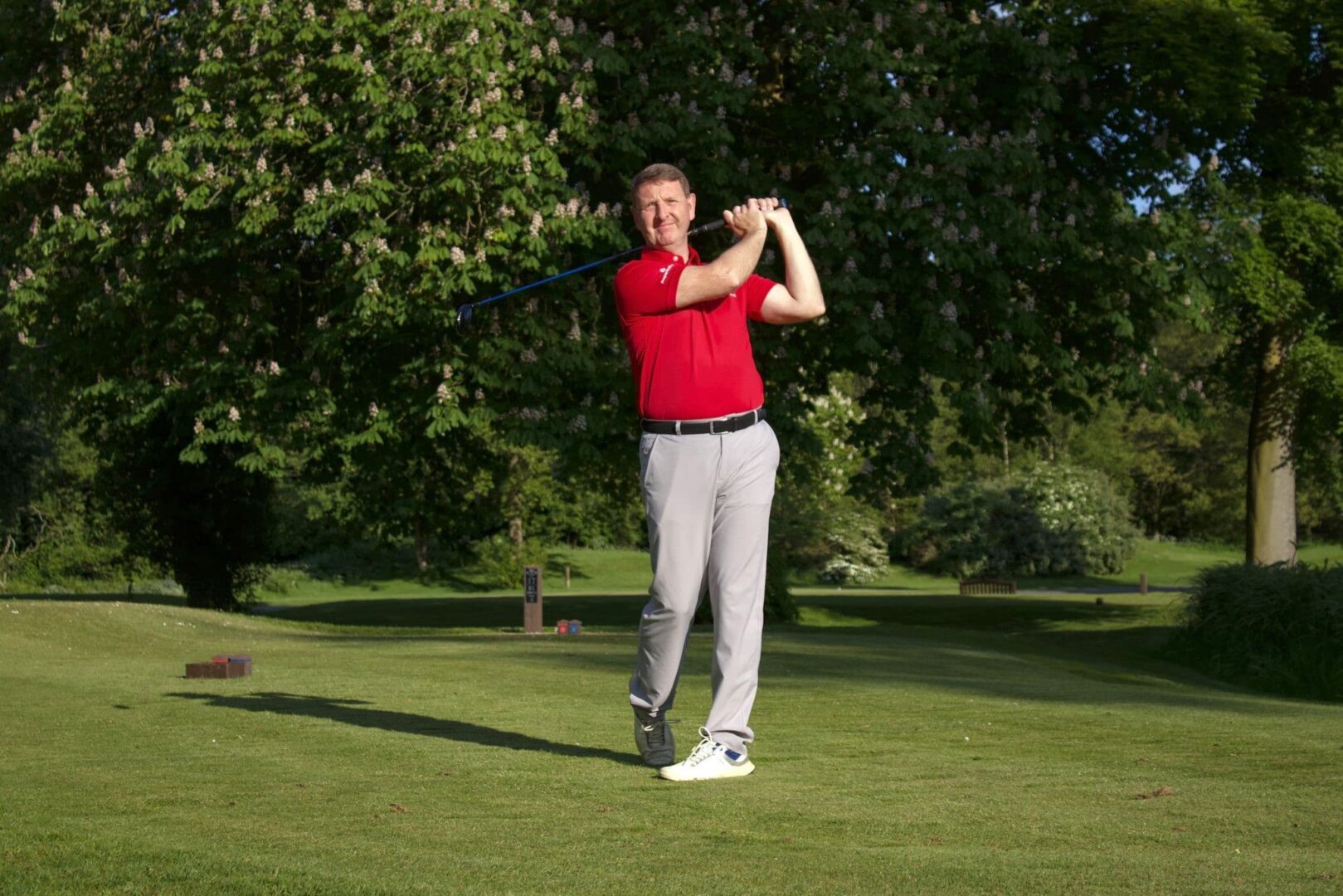
“I Trust My Three-Wood. So Why Am I Afraid of My Driver?”
Timeless Golf Swing Insight · From the Coaching Vault
“I Trust My Three-Wood. So Why Am I Afraid of My Driver?”
Have you ever stood on the tee with a club in your hands and already started worrying about where the ball might finish?
Perhaps you’ve hit a few poor shots with that club recently. Perhaps there’s one particularly horrible shot you can’t quite forget. And before you’ve even started your backswing, you’re wondering whether it’s about to happen again.
I was reminded of this during a fascinating coaching session with K, a 74-year-old golfer who had previously played off a handicap of just 1.9.
He was clearly an experienced and capable player. But there was one club he didn’t particularly trust.
His driver.
Two clubs. Two completely different feelings.
When I asked K about his golf, he told me:
K: “I can hit a three wood beautifully off the tee.”
In fact, he described his three-wood as his go-to club. He could play alongside friends using drivers and often finish in a similar position.
But then he said something interesting.
K: “I’ve just got a thing about a driver.”
He’d even bought himself a mini driver, hoping it might feel more like his trusty three-wood. But the uncertainty remained.
K: “When I go to it, of course there’s always that fear, oh it might not be alright. And then it’s not. There’s confidence, it just drops a little.”
I thought that was a revealing statement. Here was a man who had once played off 1.9, who could strike a three-wood beautifully, yet simply selecting a different club could change how he felt about the shot.
He described his particularly destructive miss as a ball that went sharply left. Occasionally, he’d slice it too. And those experiences appeared to be affecting his expectations.
So I asked what he really wanted from our session.
K: “It would be lovely for me to feel more confident with my mini driver.”
That gave us something useful to work towards. Not necessarily hitting the ball fifty yards further. Not creating a completely new golf swing. Just helping K approach the club with greater confidence and understanding.
What did the numbers actually tell us?
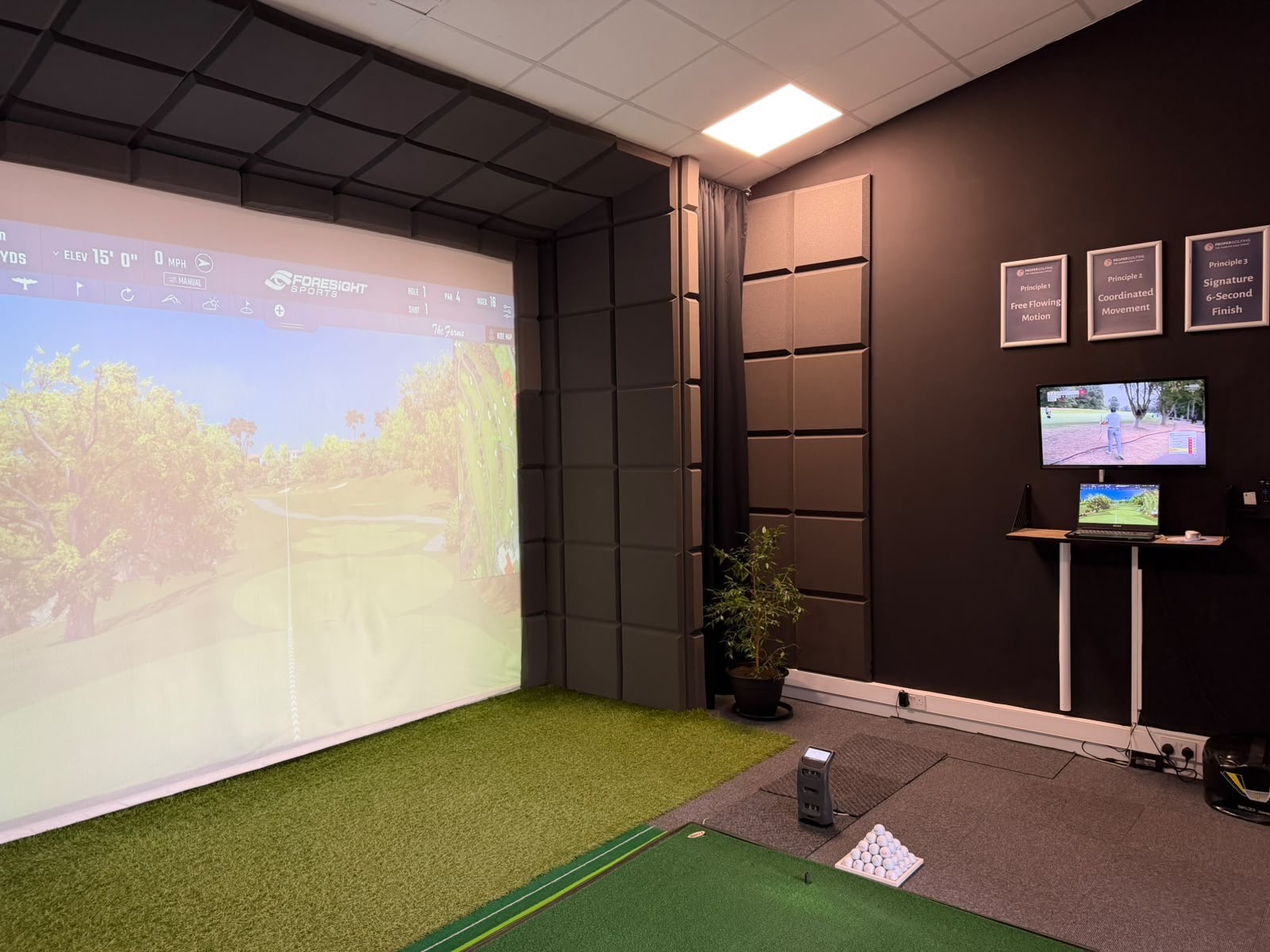
I started by watching K hit some iron shots. Rather than immediately changing his swing, I wanted to understand what was happening.
One of the first measurements caught my attention. His club path was just 0.4 degrees in-to-out.
Julian: “This number is sensational. Club path, 0.4 degree into and out.”
For that particular shot, his swing path was very close to neutral. But the ball had gone a long way left. Why?
The launch monitor recorded a clubface that was approximately 16.9 degrees closed. That was a substantial difference.
I explained to K that the severe left miss on that shot was coming from the clubface rather than an excessively out-to-in swing path. And that was important.
Because instead of saying, “I always swing across the ball,” or “My swing is terrible,” we could begin to identify what had actually happened.
A little later, another club path reading was just 0.8 degrees in-to-out. So there were encouraging elements in his movement.
Of course, we still had things to improve. But we had started replacing assumptions with evidence. And that’s something I think golfers often overlook.
A bad shot doesn’t necessarily mean everything about your swing was bad.
Then I asked K a rather strange question
As we continued, I asked K to imagine I was a complete beginner. What advice would he give me?
One of his first answers was:
K: “Be relaxed.”
Interesting, I thought. He already understood something very important. But did he actually allow himself to be relaxed when he played?
We explored some of the things he’d been taught over the years. Keeping his eye on the ball. Keeping his left arm straight. Trying to control the clubface. All perfectly familiar ideas to many golfers.
But I wanted K to experience what happened when we challenged some of those assumptions. We experimented with movement, arm tension and allowing his eyes and body to follow the ball more naturally.
At one point, when we allowed his left arm to become less rigid, the launch monitor recorded his club speed increasing to 74 mph, with ball speed reaching 99 mph, compared with approximately 87 mph on an earlier shot. He also produced an eight-iron shot that the monitor showed at approximately 160 yards.
These were individual shots during an experiment, not proof that one adjustment would always produce that result. But they were enough to make K question what he’d previously believed about his swing.
His movement was becoming freer. And he was discovering that relaxing certain parts of his body didn’t automatically mean losing control. Quite the opposite appeared possible.
The moment the lesson became about something other than golf
During our conversation, K mentioned that he’d spent much of his working life as a professional musician. He’d performed with the London Philharmonic and understood what it meant to perform at a very high level.
Now that was interesting. Because suddenly we had something from his own experience that could help us understand his golf. So I asked him:
Julian: “If you were playing your best, not golf, music, what would it sound and feel like to you?”
His answer was immediate.
K: “No, it would be just natural. I wouldn’t have to think what I was doing.”
That was a wonderful moment. Here was somebody who knew from decades of professional experience that his best musical performances weren’t produced by consciously controlling every movement. He’d practised and developed those skills until they became familiar.
Yet when he stood over a golf ball, especially with a driver, he could find himself worrying about everything that might go wrong.
I wasn’t suggesting that golf and music are identical. But K already understood the feeling of performing naturally. And that gave us something meaningful to connect with his golf swing.
“It’s like somebody’s just taken the shackles off.”
As we continued, I encouraged K to move with less unnecessary tension and to complete his swing rather than restricting himself through impact. He hit another shot.
Julian: “How’s that for a ball strike?”
K: “Beautiful, that felt good.”
I could see the difference in his movement.
Julian: “It looks like somebody’s just taken the shackles off. It’s much more fluid and more rhythmic.”
And K replied:
K: “I think it’s been waiting for it. A bloody long time.”
I loved that. Because he wasn’t describing some extraordinary technical breakthrough. He was beginning to experience a feeling that had probably been missing from his golf for some time.
Freedom. Not swinging carelessly. Not abandoning technique. But allowing his body to move without so much unnecessary interference.
A lesson I learned many years ago
During our session, I shared something that had stayed with me from my own golfing career. I was having a lesson with Pete Cameron. I’d hit a poor shot and become frustrated.
Pete looked me in the eye and said:
“You are not good enough to get angry, get curious.”
I’ve never forgotten those words. And they’re just as relevant today.
When we hit a bad shot, it’s very easy to become annoyed. We might immediately blame our backswing, our grip or our inability to play under pressure.
But what if we became curious instead? What actually happened? What did the club do? How did the movement feel? What might we learn from that particular shot?
That’s how I’d approached K’s lesson. Rather than accepting that his driver was something to fear, we started investigating why he struggled with it. And we were discovering that some of the movements he’d developed over many years might be making the job more difficult than it needed to be.
Finally, the driver came out
Towards the end of the session, we returned to the club that had brought K to see me. We’d already explored relaxation, a freer movement through the ball and the relationship between his head, body and arms.
Now we looked at how he started his backswing. K had a tendency to set his wrists very early. By encouraging him to turn his body first, he began to create a wider movement and a feeling of having more time. He noticed that difference himself.
And the encouraging thing was that the basic movement didn’t need to become something completely different simply because he was holding a driver. The setup and physical demands of the club were different, of course. But the underlying feeling of turning, coordinating the movement and completing the swing could remain familiar.
That idea sits at the heart of the Timeless Golf Swing®, our evidence-backed, trademarked golf swing philosophy: one free-flowing, coordinated movement, whichever club you happen to be holding.
After working through this, K said something that made the session particularly rewarding.
K: “Well, it’s been a revelation.”
Now, that doesn’t mean every drive he hits from now on will be perfect. And we hadn’t measured a long-term improvement in his scores. But we’d begun to change how he understood the club and the movements involved.
Perhaps most importantly, he had experienced something better than simply being told what was wrong. He’d experienced what was possible.
What did I learn from K?
Looking back, I think this lesson illustrates something important about how we remember our golf.
K had a reliable three-wood and a history of good experiences with it. His driver carried a very different set of expectations. He remembered the destructive left misses and approached the club with apprehension.
That didn’t mean his concerns were imaginary. There were genuine technical issues to investigate. But it did mean we needed to look beyond his memories of poor drives to understand the golfer standing in front of me.
And when we did, we found plenty of encouraging things. A very respectable swing path on his early iron shots. The ability to produce greater speed when unnecessary tension was reduced. And, perhaps most encouragingly, a golfer who could recognise and enjoy a more natural movement.
For me, that was the real progress.
Julian’s final thought
I often think golfers give their poor shots far more attention than their good ones. And sometimes that becomes part of how they see themselves as players.
K’s experience reminds us that a few memorable bad shots shouldn’t define everything we’re capable of. There’s value in remembering what works, recognising the good movements and being curious about the ones that don’t produce the result we wanted.
Because if we only remember the bad shots, we may be overlooking some very useful evidence about our golf.
So next time you play, try to remember the whole round. Not just the mistakes. And remember what Pete Cameron told me all those years ago.
Get curious.
You might discover that there’s far more to your golf than the shots you’d rather forget.
Until next time,
Julian Mellor & Jo Cameron
From the Proper Golfing Coaching Vault: a genuine one-to-one coaching session. The golfer is identified only as K. Dialogue is drawn from the lesson transcript, with some minor transcription uncertainty. Companion read in Better Golf in Five: Why Do We Remember Our Bad Golf Shots More Than Our Good Ones?
Your Next Step
Ready to Get Curious About Your Own Golf?
Whether it’s a day in the studio with Julian, a trip with us, or clubs built for the swing you have today.

VIP Day
The Day Everything Clicks
A full private day with Julian, just like K’s session. Swing breakdown, on-course evaluation, lunch and a personalised follow-up plan. Limited to two VIP Days each month.
Discover VIP Days
Trips & Experiences
Coaching, Golf and Good Company
Winter sun in Tenerife this January, or The Shakespeare English Golf and Castles Experience in Warwickshire next May, hosted personally by Julian and Jo. Places are limited.
See Trips & Events
Equipment
XXIO: More Distance, Less Effort
Not sure about your driver? As the UK’s most chosen XXIO centre, we’ll match you to lightweight clubs designed for the swing you have today.
Discover XXIO