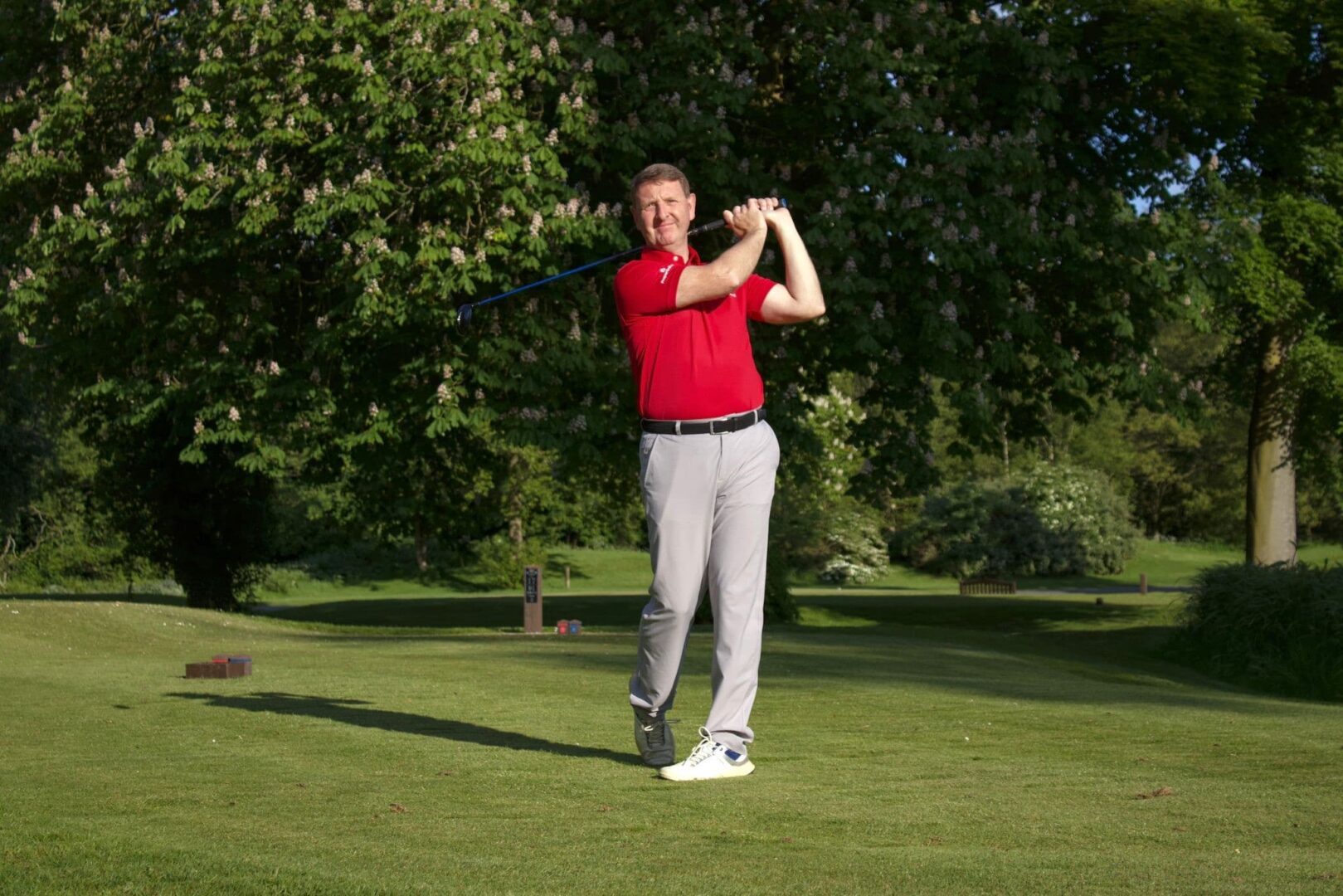
Why Most older Golfers Struggle What 500+ Hours of Golf Swing Data Reveals
Over the past few years we’ve analysed and recorded more than 500 hours of real golfer swings inside the Proper Golfing members vault.
Different ages. Different handicaps. Different countries.
But the same patterns keep appearing.
In a recent members session, golfers including Barrie, Brian, Derek, Dick, George, Mike, Stuart, Tom, Bruce and David shared their experiences and discoveries while we reviewed vault footage together. What emerged was a set of consistent technical truths that explain why many golfers plateau — and what actually creates improvement.
This article shares the most important of those findings.
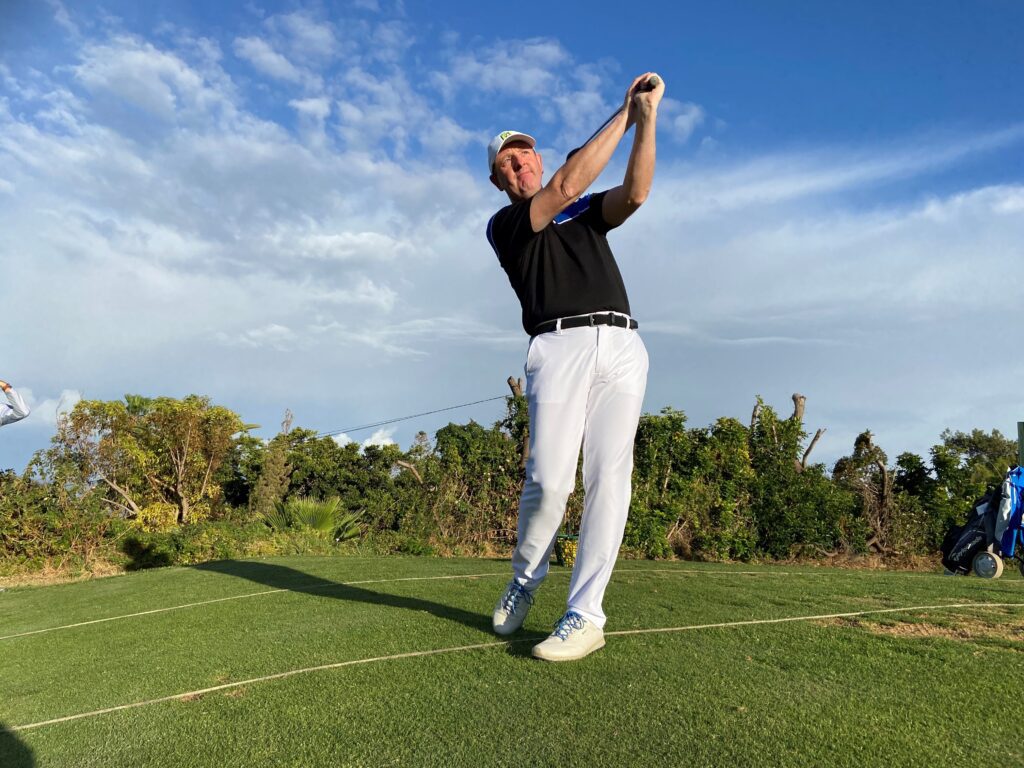
Clubface control, not swing path, is the real separator
One of the clearest patterns from measured swing data is this:
Lower-handicap golfers typically vary the clubface by only 1–2 degrees.
Struggling golfers often vary it by 20–30 degrees.
That difference alone explains a huge amount of inconsistency.
Most golfers are taught to fix path, plane or positions.
But start direction and strike quality are dominated by face orientation at impact.
During the session, David described how small changes in face orientation completely altered his strike pattern. Dick’s question about grip pressure led to the realisation that equal hand pressure is one of the simplest ways to stabilise face delivery.
For many members, this reframed practice priorities away from positions and toward face stability.
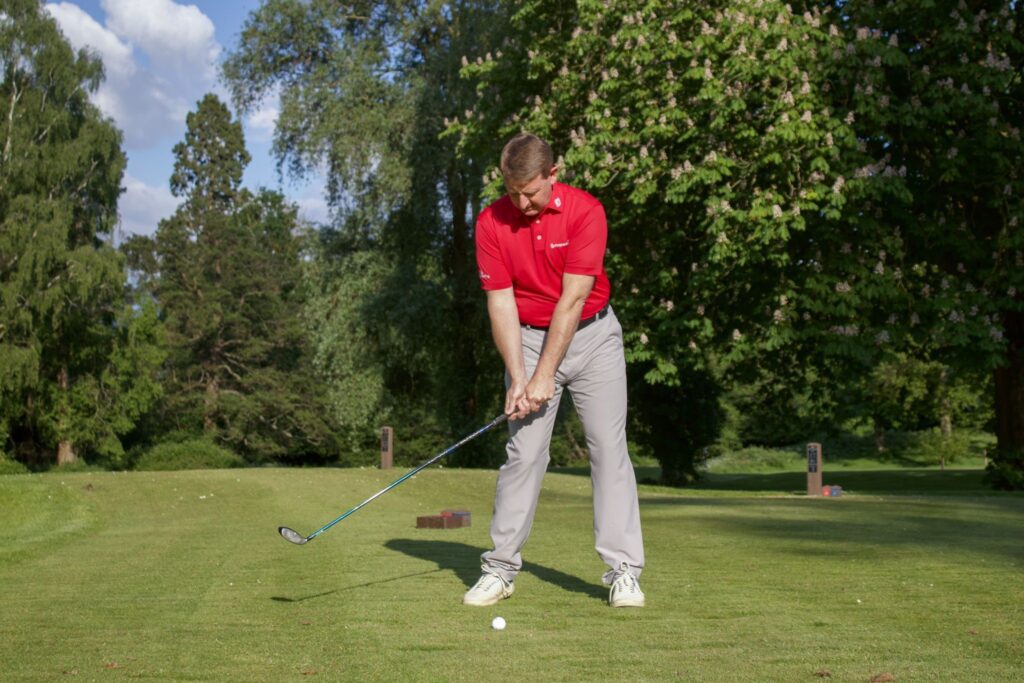
Grip pressure is a hidden face control variable
A recurring theme in vault swings is uneven hand pressure.
Key mechanics:
- Uneven pressure rotates the clubface
- Excess trail-hand pressure changes face dynamically
- Equal pressure stabilises orientation
- Light but equal grip gives control without tension
Dick’s insight was that the last two fingers can be firm while the wrists remain free. That combination produces stability without stiffness.
Brian linked this to turn mechanics. When turn is limited, pressure often stays in the trail toe, influencing how the hands deliver the face later.
So what feels like a hand problem often starts in the body.
Many golfers think they turn — but actually sway
One of the most common vault patterns is lateral hip movement instead of rotation.
Golfers feel they are turning.
But the trail hip is actually shifting sideways.
This creates predictable consequences:
- Club drops underneath
- Path recovery over the top
- Rushed transition
Barrie described how allowing his lead heel to lift improved his backswing completion and made delivery feel more natural. Derek recognised that what he perceived as turn was actually sway. Stuart connected this to senior golfers often defaulting to lateral movement and experimented with a 60-40 setup to encourage rotation.
The technical shift is subtle but powerful: allowing the lead ankle or foot to move naturally enables real pelvic rotation and an inside path.
Transition faults often start in the backswing
Another repeated vault sequence looks like this:
Limited turn → short backswing → rushed transition → over-the-top path
Many golfers try to fix transition timing directly.
But the cause is earlier.
Tom referenced a weight-shift drill that moves the lead foot before takeaway, prompting discussion about when forward movement should begin. Bruce linked takeaway direction to earlier backswing structure rather than downswing compensation.
The shared realisation across the group was that apparent downswing problems were actually backswing depth and turn issues.
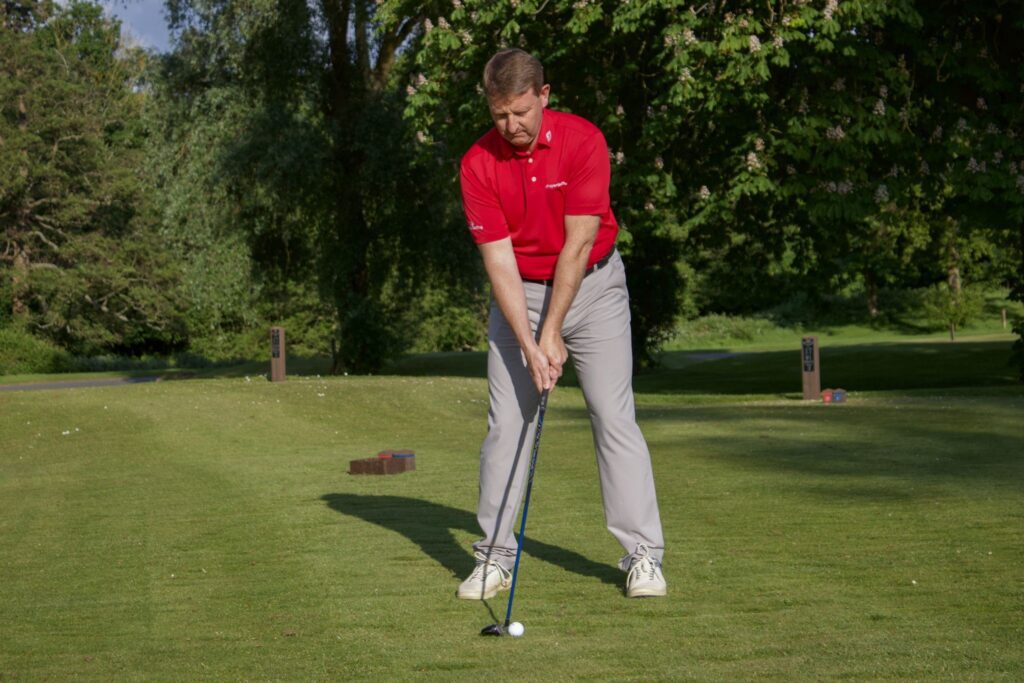
The lead foot insight most golfers miss
Mike shared a subtle but important discovery.
Trying to actively lift the lead foot created instability.
Allowing the lead ankle to move naturally improved rotation.
This distinction appears frequently in vault swings. Forced movement creates tension. Allowed movement enables rotation.
Mike also noted his practice approach has shifted from general practice to structured warm-up since joining, illustrating how awareness changes behaviour.
What this means for golfers
Across hundreds of analysed swings and live member experiences, improvement repeatedly traces back to a small set of fundamentals:
- Face stability dominates direction and strike
- Grip pressure influences face delivery
- True turn replaces lateral sway
- Full backswing reduces transition rush
- Natural foot movement enables rotation
Most golfers don’t lack effort.
They lack clarity on what actually matters.
Learn more inside the Proper Golfing Virtual Academy
If you’d like to explore the full vault of swing analysis, guided practice sessions and member discussions referenced here, you can learn more about membership here:
Members resources referenced in this article
The following in-depth lessons are available inside the Proper Golfing members library:
1% Marginal Gains for Continued Improvement
https://my.propergolfing.com/lessons/1-marginal-gains-for-continued-by-improvement
Swing Killers: 8-Point Swing Check
https://my.propergolfing.com/lessons/1-swing-killers-8-point-swing-check
½–¾ Full Swing Exercise
https://my.propergolfing.com/lessons/1-2-3-4-full-swing-exercise
Why do I want to smash the ball on the range?
https://my.propergolfing.com/why-do-i-want-to-smash-the-ball-on-the-range
Where’s my confidence gone?
https://my.propergolfing.com/wheres-my-confidence-gone
If you’d like, I can also provide an SEO title, meta description and featured image suggestions for the page.
Interested to read more? Senior golf lessons: Golfers Deserve Better. This Is Where It Begins – Proper Golfing
More here How to Create a STABLE Club Face Every Time – Golf Tip
.
See our real transformations here
To book our personalised golf coaching experience, go here Proper Golfing
To listen to more podcasts on Apple – go here https://podcasts.apple.com/gb/podcast/the-proper-golfing-podcast-with-author-pga/id1614221973
See you on the tee,
Julian and Jo – Co-Creators of Proper Golfing and The Timeless Golf Swing Method
Proper Golfing
The leaders in real-world golf transformation for golfers over 50. No fluff. Just results